
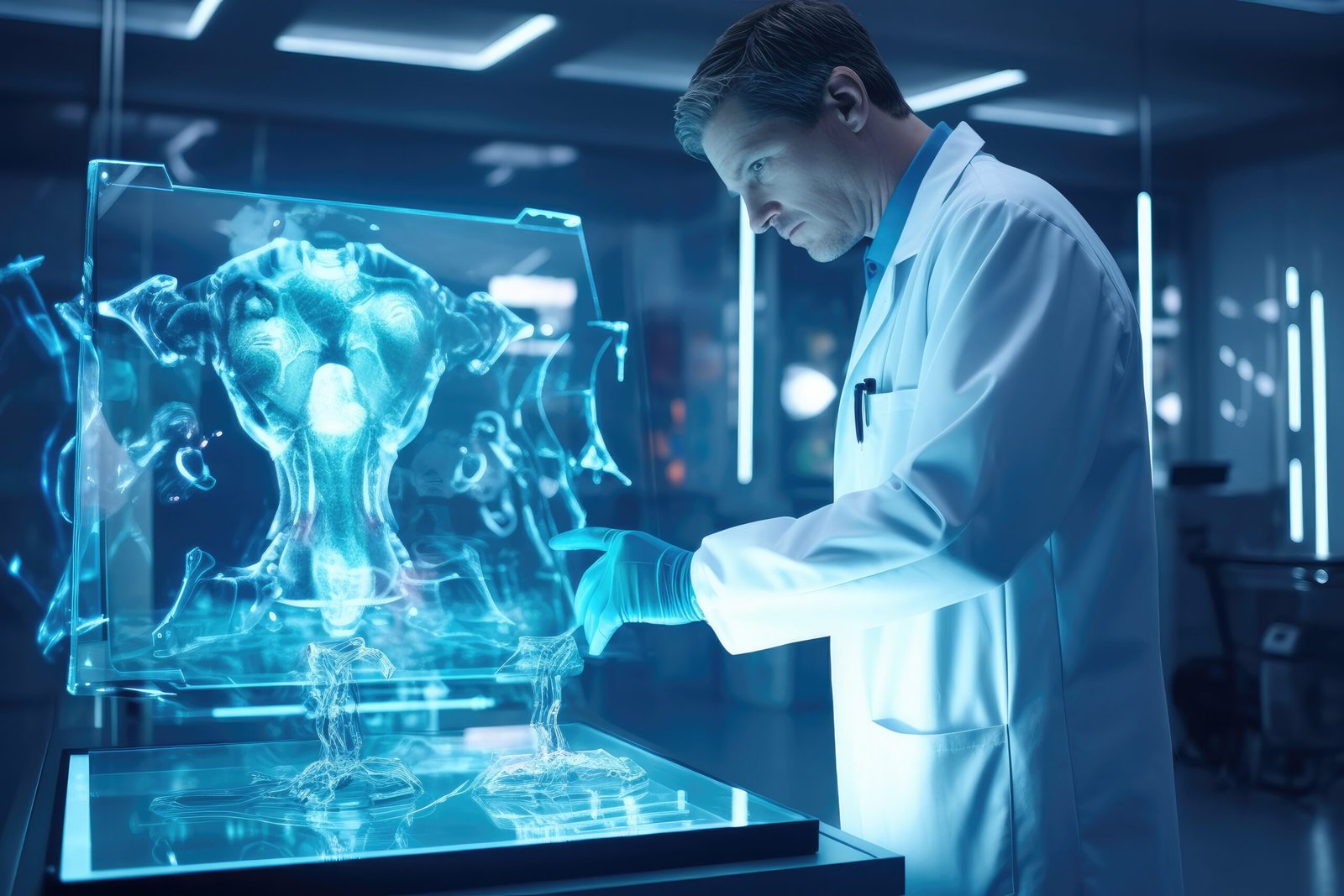
Artificial Intelligence (AI) is rapidly transforming the healthcare industry by improving diagnostic accuracy, automating workflows, and enhancing patient experiences. From predictive analytics to robotic-assisted surgeries, AI helps medical professionals make faster, smarter, and more efficient decisions.
Healthcare organizations worldwide, including initiatives supported by World Health Organization, are exploring AI technologies to improve medical outcomes, reduce costs, and deliver personalized care.
As technology continues to evolve, AI is expected to become a critical component of modern healthcare systems.
1. Introduction to AI in Healthcare
Artificial Intelligence refers to computer systems that can perform tasks requiring human intelligence, such as learning, reasoning, and decision-making. In healthcare, AI systems analyze large amounts of medical data to identify patterns and provide insights that support clinical decisions.
AI technologies are currently used in:
-
Medical imaging analysis
-
Disease prediction
-
Virtual health assistants
-
Drug discovery
-
Patient data management
These innovations help healthcare providers deliver more accurate and efficient treatment.
2. How AI Improves Diagnosis and Treatment
One of the most important applications of AI is disease detection and diagnosis. AI-powered tools can analyze medical images, patient history, and laboratory results to identify health conditions earlier than traditional methods.
Medical Imaging
AI can detect abnormalities in X-rays, MRIs, and CT scans with high accuracy, helping doctors diagnose diseases like cancer and heart conditions at earlier stages.
Predictive Analytics
AI predicts potential health risks by analyzing patient data, allowing doctors to take preventive action before conditions worsen.
Personalized Treatment
AI helps create personalized treatment plans based on individual patient data, improving recovery rates and patient satisfaction.
3. Benefits of AI in Healthcare
AI offers several advantages that improve both patient care and operational efficiency.
Faster Diagnosis
AI systems process large volumes of data quickly, reducing diagnosis time.
Improved Accuracy
Machine learning algorithms reduce human error and enhance decision-making.
Reduced Costs
Automation of administrative tasks helps healthcare organizations reduce operational expenses.
Enhanced Patient Experience
AI-powered chatbots and virtual assistants provide 24/7 support to patients.
Better Resource Management
Hospitals can use AI to optimize staffing, scheduling, and resource allocation.
4. Challenges and Limitations
Despite its benefits, AI in healthcare also presents challenges.
Data Privacy Concerns
Healthcare data is sensitive, and organizations must ensure strong security measures.
High Implementation Costs
AI systems require significant investment in infrastructure and training.
Regulatory and Ethical Issues
AI adoption must comply with medical regulations and ethical standards.
Human Dependency
AI supports decision-making but cannot replace human medical expertise.
Addressing these challenges is essential for the successful adoption of AI technologies.
5. The Future of AI in Medical Innovation
The future of AI in healthcare looks promising. Emerging technologies will continue to enhance patient care and improve medical research.
Expected developments include:
-
AI-powered robotic surgeries
-
Advanced drug discovery systems
-
Real-time patient monitoring devices
-
Smart wearable health technology
-
Automated hospital management systems
As research progresses, AI will play an increasingly important role in transforming healthcare delivery worldwide.
6. Conclusion
Artificial Intelligence is revolutionizing healthcare by improving diagnosis accuracy, enabling personalized treatment, and optimizing hospital operations. While challenges remain, the potential benefits of AI far outweigh the risks.
As healthcare systems continue to adopt AI-driven technologies, patients can expect more efficient, accessible, and high-quality medical care in the future.